How to Import from India: Step-by-Step Guide for Buyers
Introduction
Import from India can be highly profitable—but only when done correctly.
For new buyers, the process may seem complex due to:
- Supplier verification
- Documentation
- Logistics
This guide simplifies everything into clear, actionable steps.
At Anjaney Worldlink, we assist global buyers at every stage of this journey.
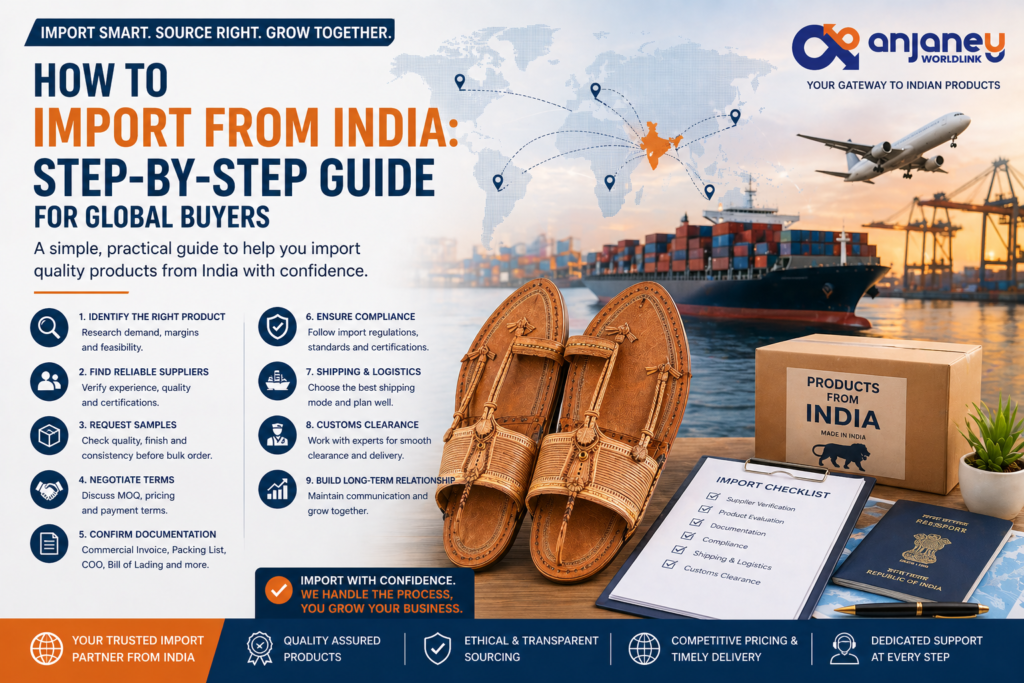
Step 1: Identify the Right Product
Start with:
- Market demand analysis
- Profit margin evaluation
- Product feasibility
Popular imports from India include:
- Handicrafts
- Agricultural products
- Leather goods
Step 2: Find Reliable Suppliers
This is the most critical step.
Check for:
- Experience in exports
- Product quality
- Certifications
Working with verified exporters like Anjaney Worldlink reduces risk significantly.
Step 3: Request Samples
Before bulk orders:
- Evaluate product quality
- Check finishing and consistency
- Test market response
Never skip this step.
Step 4: Negotiate Pricing and MOQ
Discuss:
- Minimum Order Quantity (MOQ)
- Pricing structure
- Payment terms
Ensure clarity to avoid future disputes.
Step 5: Confirm Documentation
Essential documents include:
- Commercial Invoice
- Packing List
- Certificate of Origin
- Bill of Lading
These are critical for customs clearance.
Step 6: Ensure Compliance
Each country has specific requirements:
- Food safety standards
- Labeling regulations
- Import duties
Non-compliance can delay shipments.
Step 7: Shipping and Logistics
Choose:
- Air freight (faster, expensive)
- Sea freight (cost-effective for bulk)
Ensure proper packaging to avoid damage.
Step 8: Customs Clearance
Work with:
- Freight forwarders
- Customs agents
This ensures smooth entry into your country.
Step 9: Build Long-Term Relationship
Once successful:
- Maintain supplier relationships
- Optimize repeat orders
- Scale gradually
Risk Management and Best Practices When You Import from India
When you import from India, managing risk is essential to ensure smooth transactions and long-term success. While India offers strong advantages in pricing, product diversity, and craftsmanship, following structured best practices can significantly improve your importing experience.
1. Work with Verified Export Partners
Choosing the right supplier is critical. Always prefer experienced exporters or sourcing partners like Anjaney Worldlinkwho understand international trade requirements. Verified partners ensure product quality, proper documentation, and reliable communication.
2. Start with Small Orders
Before committing to bulk shipments, begin with smaller quantities. This allows you to:
- Test product quality
- Evaluate supplier reliability
- Understand logistics timelines
This step minimizes financial risk while building trust.
3. Focus on Clear Communication
Clear and consistent communication helps avoid misunderstandings. Ensure that:
- Product specifications are documented
- Packaging requirements are defined
- Delivery timelines are agreed upon
Using written agreements or purchase orders is highly recommended.
4. Understand Payment Terms
Secure payment structures are crucial when you import from India. Common methods include:
- Advance payment (partial or full)
- Letter of Credit (LC) for larger transactions
Choose terms that balance risk for both buyer and supplier.
5. Plan Logistics and Duties in Advance
Import costs go beyond product pricing. Consider:
- Shipping charges
- Import duties and taxes
- Customs clearance fees
Proper planning ensures accurate pricing and avoids unexpected costs.
By following these best practices, global buyers can confidently import from India while reducing risks and improving efficiency. With the right approach and trusted partners, importing becomes a scalable and profitable business strategy.
Conclusion
Importing from India is not complicated—it requires the right process and partners.
With expert support from Anjaney Worldlink, you can:
- Reduce risks
- Improve efficiency
- Build a reliable supply chain
Consistent supplier communication, proper planning, and choosing trusted export partners ensure smoother operations and long-term success in international trade ventures.
Regular quality checks, clear documentation, and understanding local regulations further strengthen your import strategy and help build reliable, scalable sourcing operations over time.
Want to start importing from India?
Let Anjaney Worldlink handle sourcing, compliance, and shipping for you.
Connect with Us – www.anjaneyworldlink.comwww.anjaneyworldlink.com