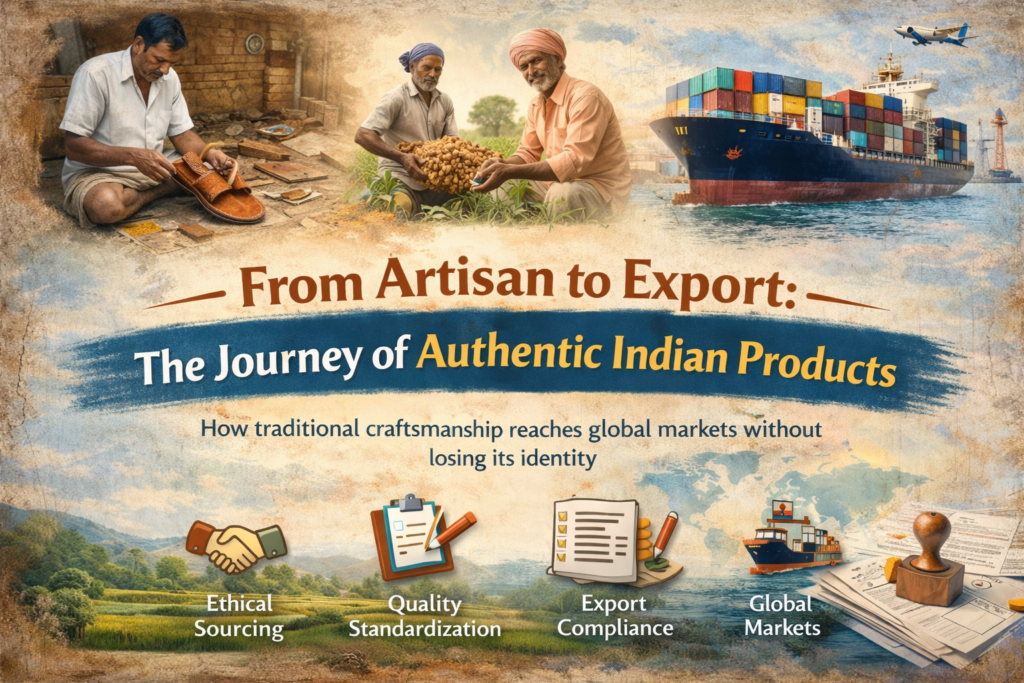
From Artisan to Export: The Journey of Authentic Indian Products
How traditional craftsmanship reaches global markets without losing its identity.
Introduction
India’s export strength lies not only in scale—but in stories, skills, and centuries-old craftsmanship. From rural workshops to global retail shelves, every authentic Indian product carries a journey shaped by tradition and precision.
At Anjaney Worldlink, we bridge this journey—ensuring that heritage products reach international markets without compromising their identity.
1. The Origin: Rural Artisans and Farmers

4
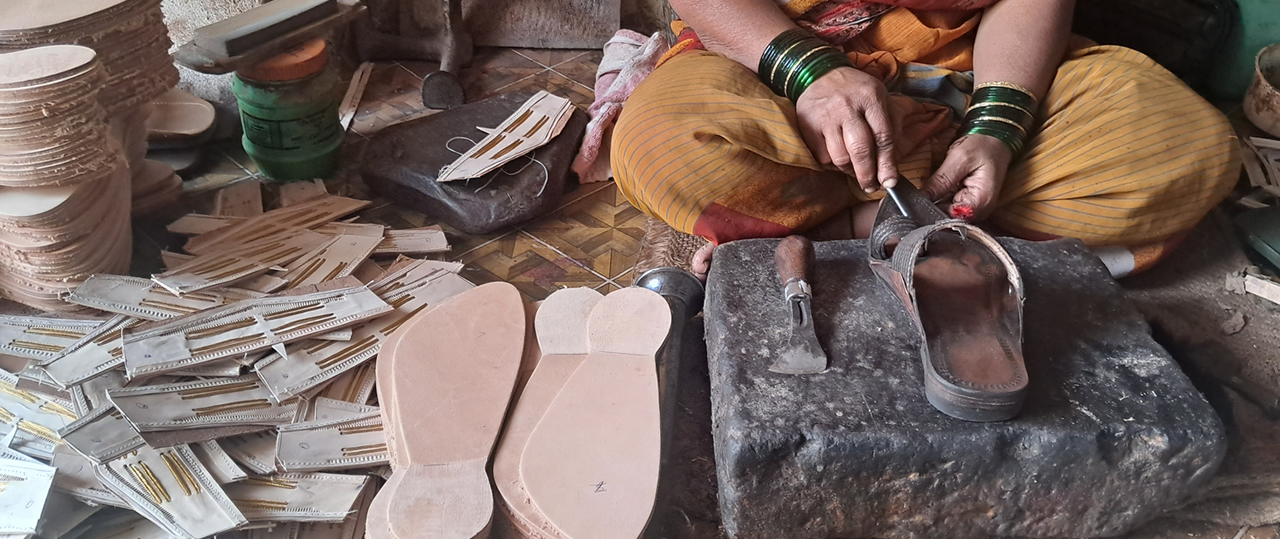
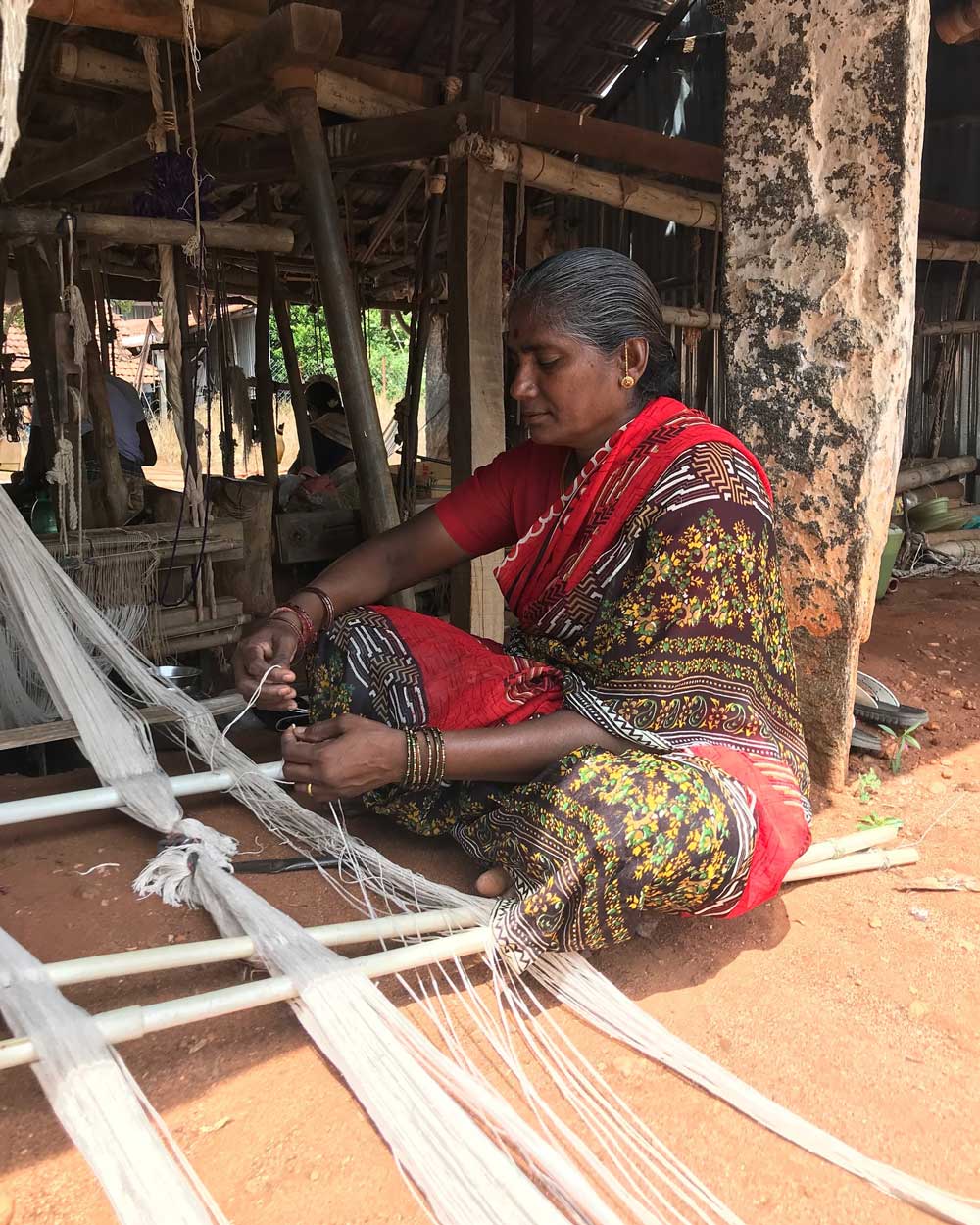
The journey begins in India’s villages and small towns, where:
- Skilled artisans create handcrafted goods using traditional techniques
- Farmers cultivate region-specific crops with generational knowledge
These products are not mass-produced—they are deeply rooted in local culture and expertise.
However, at this stage, challenges exist:
- Limited market access
- Lack of standardization
- Minimal exposure to global demand
2. Ethical Sourcing and Aggregation
4
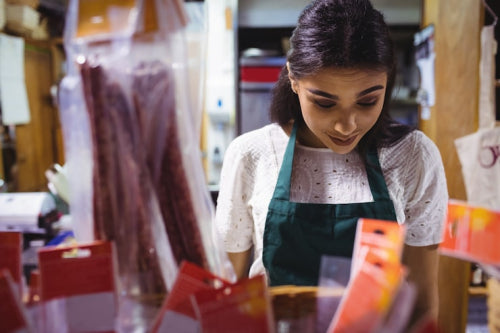
To enter global markets, products must be sourced responsibly and systematically.
This involves:
- Direct collaboration with artisans and farmer groups
- Fair pricing and sustainable sourcing practices
- Aggregation of products to meet export volumes
Ethical sourcing ensures:
- Better livelihoods for producers
- Transparency for international buyers
- Long-term supply chain stability
3. Quality Standardization


4
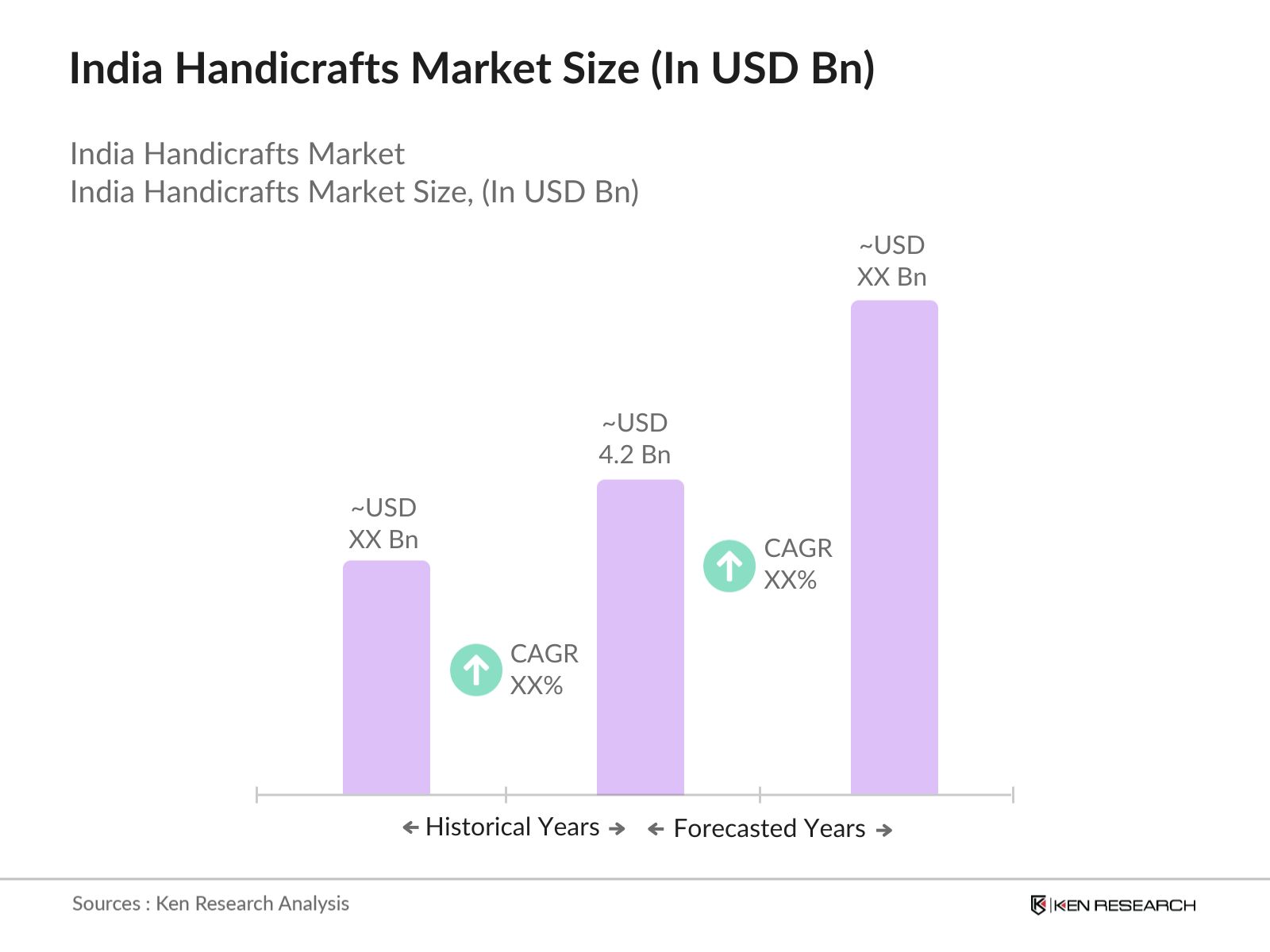
Global markets demand consistency, even for handcrafted goods.
Standardization includes:
- Size, finish, and durability checks
- Material quality verification
- Batch consistency for agricultural products
For example:
- Leather goods must meet finishing and durability benchmarks
- Food products must comply with hygiene and safety standards
This step transforms traditional products into export-ready commodities without losing authenticity.
4. Compliance and Documentation

4
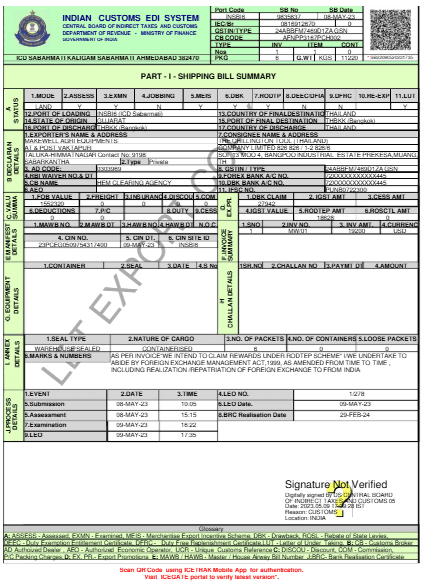
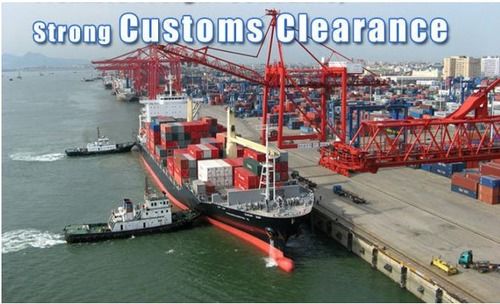
Exporting is not just about products—it’s about compliance.
Key requirements include:
- Proper documentation (invoice, packing list, certificates)
- Country-specific regulations
- Quality and safety certifications
Adhering to these ensures:
- Smooth customs clearance
- Reduced risk for buyers
- Legal and regulatory compliance in destination markets
5. Packaging, Branding, and Logistics


4
Once products are ready, they must be presented and delivered effectively.
This stage includes:
- Export-grade packaging (durable, compliant, often eco-friendly)
- Branding that communicates origin and authenticity
- Logistics planning for timely delivery
Efficient logistics ensures that products reach global markets in perfect condition and on schedule.
6. Reaching Global Markets

4
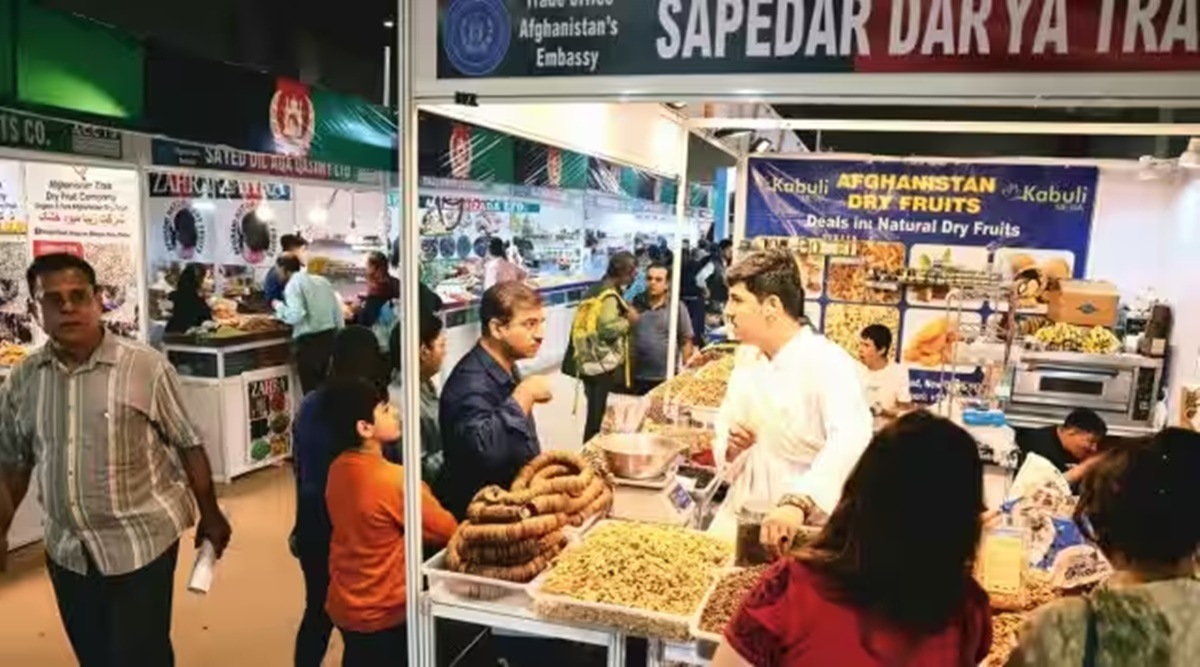
Finally, the product reaches:
- International retailers
- Importers and distributors
- E-commerce platforms
Here, the product is no longer just an item—it becomes:
- A representation of Indian heritage
- A premium offering with a story
- A competitive global product
Balancing Heritage with Global Expectations
The biggest challenge in this journey is balance:
- Preserving traditional methods
- Meeting modern quality standards
Successful export systems ensure that:
- Craftsmanship remains intact
- Processes are optimized for scale
- Buyers receive consistent and reliable products
Empowering Artisans Through Global Access
Beyond trade, exports play a vital role in sustaining livelihoods and preserving traditional skills. When authentic Indian products reach global markets, they create consistent demand for artisan communities and small-scale farmers. This demand encourages younger generations to continue traditional crafts instead of abandoning them for urban jobs.
With structured export systems, artisans gain access to better pricing, stable orders, and international recognition. At the same time, global buyers benefit from unique, story-driven products. This creates a mutually beneficial ecosystem where heritage is preserved while economic growth is enabled—making exports not just a business activity, but a long-term cultural investment.
Conclusion
The journey from artisan to export is not linear—it is a carefully managed ecosystem.
It requires:
- Ethical sourcing
- Quality control
- Compliance expertise
- Strong logistics
At Anjaney Worldlink, we specialize in managing this entire journey—connecting authentic Indian producers with global buyers while preserving the essence of every product.
Follow US :
Call to Action
Looking to source authentic Indian products directly from artisans and farms?
Partner with Anjaney Worldlink for transparent, reliable, and scalable export solutions.
Visit Us : www.anjaneyworldlink.com